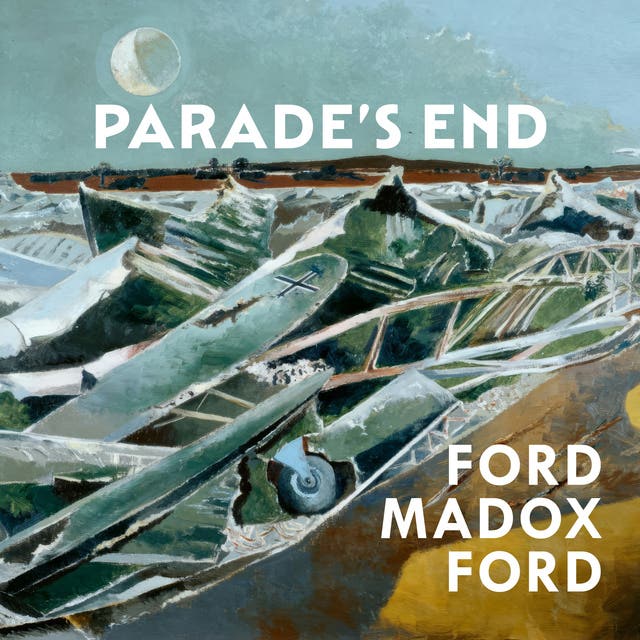
Parade's End: The Complete Tetralogy
Sinopsis de Parade's End: The Complete Tetralogy
There is a hard brightness overlying the emotion and the human suffering and the human passions… Mr. Ford achieves not only what is probably his own best work but what is certainly one of the ablest of recent English novels. — The New York Times, 1924 There are not many English novels which deserve to be called great: Parade's End is one of them. — W. H. Auden Ford Madox Ford's Parade's End tetralogy, written in the aftermath of World War I, was originally published in four parts in the 1920s: Some Do Not…; No More Parades; A Man Could Stand Up —; and Last Post. Highlighting the tension between traditional values and a rapidly changing social order in a world embroiled in war, the story details Tietjens' turmoils in both his personal life and on the warfront—and what follows when some of those struggles become one and the same. Unique among other war fiction of the time, Parade's End privileges not the conflict of the Great War itself, but the impact the war had on its participants and upon society writ large. With it's publication, Ford hoped to contribute to the obviating of all future wars.Parade's End is often referred to as one of the greatest 20th century novels, and one of the best depictions of war in literature. The 2012 television adaptation, written by Tom Stoppard (Shakespeare in Love), directed by Susanna White (Andor) and starring Benedict Cumberbatch and Rebecca Hall, was nominated for two Primetime Emmy Awards and seven BAFTA Television Awards.
Más audiolibros de Clásicos
 ¿Cuánta tierra necesita un hombre?Audiolibro · Lev Tolstói · ★ 4.2
 Brave New WorldAudiolibro · Aldous Huxley · ★ 3.9
 The SilmarillionAudiolibro · J. R. R. Tolkien · ★ 4.3
 El cuervo - DramatizadoAudiolibro · Edgar Allan Poe · ★ 4.1
 Rebelión en la granja - DramatizadoAudiolibro · George Orwell · ★ 4.6
 Lamento di PortnoyAudiolibro · Philip Roth · ★ 4.1
 El Conde de Montecristo - DramatizadoAudiolibro · Alexandre Dumas · ★ 4.7
 FoundationAudiolibro · Isaac Asimov · ★ 4.2