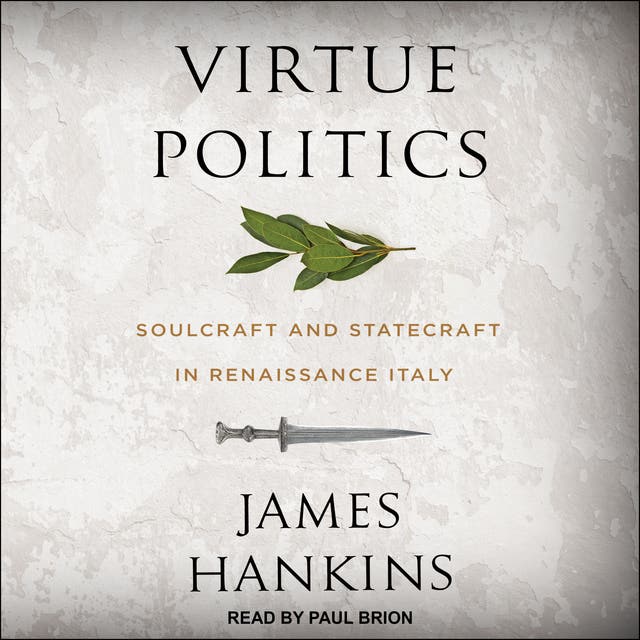
Virtue Politics: Soulcraft and Statecraft in Renaissance Italy
Sinopsis de Virtue Politics: Soulcraft and Statecraft in Renaissance Italy
Convulsed by a civilizational crisis, the great thinkers of the Renaissance set out to reconceive the nature of society. Corrupt and reckless tyrants sowing discord and ruling through fear; elites who prized wealth and status over the common good; military leaders waging endless wars. Their solution was simple and radical. They would rebuild their city, and their civilization, by transforming the moral character of its citizens. Soulcraft, they believed, was a precondition of successful statecraft.A dazzlingly ambitious reappraisal of Renaissance political thought by one of our generation's foremost intellectual historians, Virtue Politics challenges the traditional narrative that looks to the Renaissance as the seedbed of modern republicanism and sees Machiavelli as its exemplary thinker. James Hankins reveals that what most concerned the humanists was not reforming laws or institutions so much as shaping citizens. If character mattered more than constitutions, it would have to be nurtured through a new program of education they called the studia humanitatis: the humanities.We owe liberal arts education and much else besides to the bold experiment of these passionate and principled thinkers. The questions they asked would have a profound impact on later debates about good government and seem as vital today as they did then.
Más audiolibros de Historia
 De meeste mensen deugen: Een nieuwe geschiedenis van de mensAudiolibro · Rutger Bregman · ★ 4.7
 Sapiens: A Brief History of HumankindAudiolibro · Yuval Noah Harari · ★ 4.5
 Sapiens: Een kleine geschiedenis van de mensheidAudiolibro · Yuval Noah Harari · ★ 4.5
 México bizarroAudiolibro · Alejandro Rosas, Julio Patán · ★ 4.3
 Het water komtAudiolibro · Rutger Bregman · ★ 4.4
 Historias de la historia - T01E01Audiolibro · Javier Sanz · ★ 3.9
 21 lessen voor de 21ste eeuwAudiolibro · Yuval Noah Harari · ★ 4.5
 La memoria rende liberiAudiolibro · Liliana Segre · ★ 4.8